Writing menu descriptions
How to describe dishes so that guests choose them.
By Friederike Jäger · Updated 7 November 2026 · 7 minute read

Guests choose a dish by the taste they expect. That is why a description naming taste and preparation is chosen more often than a list of ingredients. In a study across five universities, this raised selection by 14 percent. Two lines are almost always enough.
Why the description decides the choice
A guest cannot taste a dish before ordering it. The decision rests on what the guest imagines, and that picture is formed by a few words on the menu, usually within seconds, because a menu is scanned rather than read.
Research supports this. In the study by Turnwald and colleagues (2019), the expectation of a good taste experience explained why taste-focused names were chosen more often. This was measured in a supplementary online experiment within the study.
What the research shows
A large field study on how dishes are named ran in five university dining halls across the United States, over a total of 185 observation days and 137,842 diner decisions. It compared three ways of naming the same vegetable dish: taste-focused, health-focused and basic. Each dish carried each of the three names on different days, and the recipe stayed the same.
Two results matter for every menu. First, in a supplementary online experiment, names that contained only praise words, fancy terms or a list of ingredients did worse than concrete descriptions of taste. Second, at the site whose dishes were rated least tasty, the names had no measurable effect. A description can only sell what the plate delivers.
Turnwald and colleagues 2019, Psychological Science. Source 1

Six principles for menu wording
Taste and preparation before ingredients
Braised, smoked over beechwood, pan-fried until crisp, slow-cooked: words like these let the guest taste. «With carrots and celery» makes them count.
Name the origin when it is true and means something
«Char from Lake Ammersee» tells the guest more than «regional fish». Every statement of origin must be accurate.
Cut empty praise
Delicious, tasty, wonderful, irresistible. These words promise something without saying what. In a supplementary experiment of the 2019 study, names made of mere praise words did worse than concrete descriptions of taste.
No words of restraint
Light, without, low-calorie, the healthy option. In the 2019 study, the same vegetable dish was chosen 29 percent more often with a taste-focused name than with a health-focused one. Meat-free dishes are described like any other; a discreet symbol is enough.
Two lines
Main ingredient, preparation, one detail you can taste. A menu is scanned, and a long description makes every dish equally important, and therefore none.
Promise only what the plate delivers
A description creates an expectation. If the dish does not meet it, it costs trust. Food descriptions must also be accurate; the local food authority and hospitality associations can say what applies.
Same dishes, different words
An invented example. Switch between before and after.
Design, dishes and prices stay the same. Only the words change.
Common mistakes
- The ingredient list«With potatoes, carrots, leek and parsley» reads like a shopping list.
- Clichés«On a bed of», «duo of», «variation of». They say nothing about the taste and sound the same on every menu.
- Praise instead of substance«Our delicious schnitzel» convinces less than «fried in clarified butter».
- Every dish the same lengthIf every description runs to three lines, none stands out.
- A separate section for vegetarian dishesIn an online experiment with 853 adults in the United Kingdom, people who often eat vegetarian chose a vegetarian dish less often from a separate section. For everyone else, the section made no difference (Bacon and Krpan 2018). A separate section gains nothing. Source 2
- Word-for-word translationA «Zwiebelrostbraten» stays a Zwiebelrostbraten on an English menu, with a short explanation underneath. A literal translation sounds odd and loses the taste.
Writing menu descriptions with ChatGPT
Many restaurants now write their menus with ChatGPT or another AI. For a first draft, that is quick. Three points deserve a second look:
- Praise words and clichésIf the draft says «irresistible», «a symphony of flavours» or «on a bed of», strike it. Words like these say nothing about the taste.
- Invented detailsThe AI knows neither where your ingredients come from nor how your kitchen prepares them. It fills in what sounds plausible. That information has to come from the kitchen.
- Everything the same lengthWhen every description has the same length and sentence structure, the menu feels monotonous.
It helps to check every AI draft against the six principles above, and against what is actually on the plate.
Frequently asked questions
How long should a menu description be?
Two lines are almost always enough: the main ingredient, the preparation and one detail you can taste. Longer rarely works better, because guests scan a menu rather than read it.
Which words should you avoid on a menu?
Empty praise such as delicious, tasty or amazing, because it says nothing about the taste. And words of restraint such as light, low-fat or healthy, because in a large study dishes with taste-focused names were chosen considerably more often than the same dishes with health-focused names.
Can you write menu descriptions with ChatGPT?
As a first draft, yes. Strike praise words and clichés afterwards, and remember that the AI does not know where your ingredients come from or how your kitchen prepares them. That information has to come from the kitchen, and every description should be checked against what is actually on the plate.
Do allergens belong in the description?
No. Allergens are marked separately, for example with letters or numbers and a key at the end of the menu. What must be declared depends on where you are: in the European Union it is set out in Regulation (EU) No 1169/2011 on food information; elsewhere, your local food authority can advise.
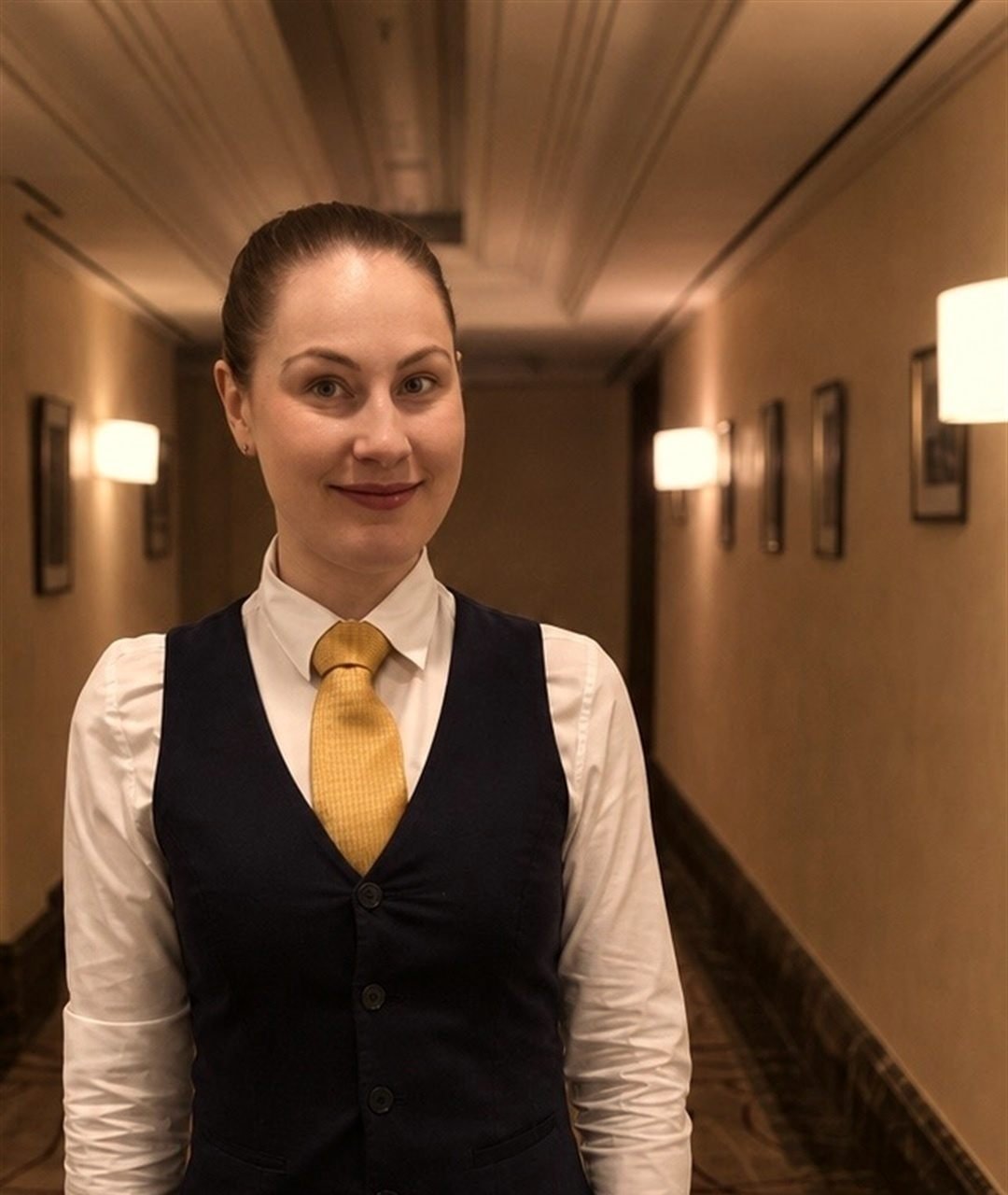
Friederike Jäger
Friederike Jäger comes from the service floor. She was shaped by the Fairmont Hotel Vier Jahreszeiten in Hamburg, the Excelsior Hotel Ernst in Cologne, Brenners Park-Hotel in Baden-Baden, the Breidenbacher Hof in Düsseldorf, Adare Manor in Ireland and Geranium in Copenhagen. With Nuelund, she works on food and drinks menus for hotels and restaurants.
Sources
- Turnwald, B. P. et al. (2019). Increasing vegetable intake by emphasizing tasty and enjoyable attributes: a randomized controlled multisite intervention for taste-focused labeling. Psychological Science, 30(11). doi.org/10.1177/0956797619872191
- Bacon, L., Krpan, D. (2018). (Not) eating for the environment: the impact of restaurant menu design on vegetarian food choice. Appetite, 125. doi.org/10.1016/j.appet.2018.02.006

Guests do not order what the kitchen does best. They order what the menu tells best.
Book a call